
🌲 Weird, Wild, and Wonderful American Summer Camps
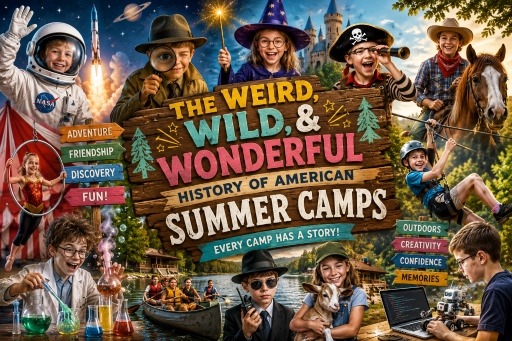
American summer camps started during the late nineteenth century. Initially, parents feared crowded cities harmed childhood development. Because of those concerns, outdoor summer camps spread rapidly across America. Before long, camps evolved into wonderfully strange and creative experiences. Today, moms love discovering Weird, Wild, and Wonderful American Summer Camps that turn childhood summers into unforgettable adventures.
From cowboy adventures to coding camps, Weird, Wild, and Wonderful American Summer Camp culture constantly reinvented itself. Better yet, many unusual camp trends created unforgettable childhood memories nationwide.
🤠 Cowboy Camps
Peak Popularity: 1930s–1960s
During Hollywood’s Western era, cowboy camps dominated childhood summers everywhere. Naturally, kids dreamed about horses, frontier towns, and campfire adventures.
At these camps, children practiced roping tricks and horseback riding daily. Meanwhile, counselors staged fake robberies and saloon showdowns constantly. Occasionally, campers slept inside rustic frontier cabins beneath the stars.
Not surprisingly, parents loved the confidence-building outdoor experiences greatly.
🚀 Space Camps
Peak Popularity: 1969–1990s
After the entity[“historical_event”,”Apollo 11 Moon Landing”,”1969 Moon landing mission”], space camps exploded nationwide.
Suddenly, children obsessed over rockets, astronauts, and NASA missions.
At many camps, kids trained inside astronaut simulators enthusiastically. Elsewhere, counselors organized pretend space launches with dramatic countdowns. From time to time, campers experienced mock zero-gravity training for extra excitement.
Today, STEM summer camps still attract science-loving families heavily.
🕵️ Spy Camps
Peak Popularity: 1960s–1980s
During the Cold War, spy camps fascinated adventurous children everywhere. Predictably, James Bond movies inspired many camp themes directly.
At spy camps, kids cracked secret codes and solved mysteries daily. Meanwhile, counselors organized undercover missions using hidden clues and disguises. At times, campers sneaked through obstacle courses carrying fake intelligence files.
Without question, spy camps blended imagination and teamwork perfectly.
🎪 Circus Camps
Peak Popularity: 1940s–1970s
Before smartphones existed, circus entertainment captivated American families completely. Accordingly, circus camps became surprisingly popular during the mid-century years.
At these camps, kids learned juggling, acrobatics, and trapeze tricks safely. Meanwhile, counselors taught clown performance and tightrope balancing techniques. In many cases, campers performed colorful circus shows for visiting parents proudly.
Today, performing arts camps continue that playful tradition beautifully.
🏰 Medieval Fantasy Camps
Peak Popularity: 1980s–Present
Fantasy camps exploded after fantasy novels gained mainstream popularity nationwide. Soon afterward, roleplaying games boosted the trend even further.
At these camps, children dressed like knights, queens, and mythical heroes. Meanwhile, counselors organized dragon hunts and medieval tournaments daily. Additionally, campers battled safely using foam swords and shields enthusiastically.
Predictably, imaginative kids adored the immersive storytelling experiences.
💃 Etiquette Camps
Peak Popularity: 1920s–1950s
Not every camp focused on dirt trails and campfires outdoors. Instead, etiquette camps emphasized manners, posture, and social confidence heavily.
At these camps, girls practiced ballroom dancing and formal dining skills. At the same time, boys studied leadership, public speaking, and polished conversation techniques. In certain programs, campers attended mock tea parties with elaborate dress codes.
Naturally, wealthy families embraced these refined summer experiences eagerly.
🌲 Primitive Skills Camps
Peak Popularity: 1890s–1930s
Early American camps focused strongly on wilderness survival and outdoor toughness. At the time, parents worried modern city life weakened children physically.
At these camps, kids learned canoe building and fire-starting techniques regularly. Meanwhile, counselors taught fishing, wood chopping, and wilderness tracking skills. In some cases, camps banned luxury items completely for authenticity.
Importantly, these camps shaped America’s entire summer camp tradition originally.
🎬 Hollywood Performance Camps
Peak Popularity: 1980s–2000s
As celebrity culture expanded, performance camps gained enormous popularity nationwide. Consequently, creative kids pursued acting, filmmaking, and dance programs enthusiastically.
At these camps, children practiced improv comedy and theater scenes daily. Meanwhile, counselors filmed mock television shows and mini movies regularly. For special events, campers walked pretend red carpets before final performances proudly.
Today, arts camps remain popular among expressive young personalities.
🏴☠️ Pirate Adventure Camps
Peak Popularity: 1950s–Present
Pirate camps transformed classic treasure stories into immersive summer adventures. Naturally, adventurous children loved the imaginative outdoor storytelling instantly.
At these camps, kids searched for hidden treasure using weathered maps. Meanwhile, counselors staged dramatic pirate battles and scavenger hunts constantly. In creative moments, campers built makeshift pirate ships from recycled materials.
Without surprise, pirate camps remain wildly popular today.
🔍 Junior Detective Camps
Peak Popularity: 1940s–1970s
Detective camps grew popular during America’s crime-fiction boom years. Consequently, curious children rushed toward mystery-solving camp experiences eagerly.
At these camps, kids studied fingerprinting and clue analysis carefully. Meanwhile, counselors created staged “camp mysteries” for campers to solve. During elaborate games, children interrogated fake suspects through roleplaying scenarios.
Today, mystery camps still attract problem-solving young minds everywhere.
🌾 Farm Camps
Peak Popularity: 1910s–1950s
As cities expanded rapidly, parents wanted children connected with nature again. Therefore, farm camps became wholesome summer alternatives for many families.
At these camps, kids collected eggs and harvested vegetables daily. Meanwhile, counselors taught gardening, composting, and animal care naturally. Before breakfast, campers often completed exciting barn chores willingly.
Today, eco-friendly camps continue growing across America steadily.
🔥 Survivalist Camps
Peak Popularity: 1970s–1990s
Economic uncertainty and Cold War fears fueled survivalist camp popularity strongly. Because of this, parents valued self-reliance and emergency preparedness skills highly.
At these camps, kids built shelters and practiced wilderness survival techniques. Meanwhile, counselors taught knot tying, navigation, and disaster preparation skills. For realism, camps sometimes simulated extreme weather emergencies outdoors.
Importantly, survival camps encouraged confidence and resilience outdoors.
🧙♂️ Wizard Camps
Peak Popularity: 2000s–Present
Fantasy franchises transformed wizard camps into major cultural phenomena rapidly. Soon afterward, magical roleplaying camps appeared across America everywhere.
At these camps, children crafted wands and mixed pretend potions creatively. Meanwhile, counselors organized magical tournaments and fantasy competitions enthusiastically. Beyond that, campers joined fictional “houses” with point systems and rivalries.
Predictably, young fantasy fans embraced wizard camps passionately.
🧗 Extreme Adventure Camps
Peak Popularity: 1990s–Present
By the 1990s, camps competed through increasingly thrilling activities constantly. As a result, adventure camps introduced ziplining, motocross, and stunt programs rapidly.
At these camps, kids skateboarded and climbed giant obstacle courses fearlessly. Meanwhile, counselors supervised trapeze lessons and adrenaline-filled challenges carefully. For extra excitement, campers trained like action-movie stunt performers playfully.
Today, thrill-seeking families continue choosing these high-energy camp experiences eagerly.
💻 Technology and Coding Camps
Peak Popularity: 1990s–Present
As computers reshaped childhood, technology camps exploded nationwide rapidly. Consequently, coding camps became popular among academically focused families quickly.
At these camps, kids built robots and designed video games creatively. Meanwhile, counselors taught programming, engineering, and artificial intelligence basics. By summer’s end, campers sometimes launched small apps successfully.
Interestingly, coding camps completely reversed early wilderness camp traditions.
🌟 Why Summer Camps Still Matter Today
Today, moms want more than simple childcare during summer break. Instead, families search for educational camps and enriching outdoor experiences actively. Likewise, parents value confidence-building activities and healthy social interaction greatly.
Importantly, Weird, Wild, and Wonderful American Summer Camps encourage independence away from endless screen time. Meanwhile, children build resilience, friendships, leadership skills, and lifelong memories naturally. Best of all, camps help kids explore unique passions safely and creatively.
From circus tents to coding labs, American summer camps remain wonderfully unpredictable. Even better, new camp trends continue appearing every single summer nationwide. Ultimately, summer camp history celebrates childhood imagination at its absolute finest.
Discover more from Make-A-Pet
Subscribe to get the latest posts sent to your email.