
Classic Teddy Bear
Few toys have earned the love and loyalty of the fascinating Teddy Bear. For more than 120 years, children have hugged, collected, and cherished these cuddly companions. Meanwhile, parents have passed beloved bears from one generation to the next. Today, the Teddy Bear remains one of the most recognizable toys in the world. Yet many families never learn the remarkable story behind its creation.
The Surprising Event That Started It All
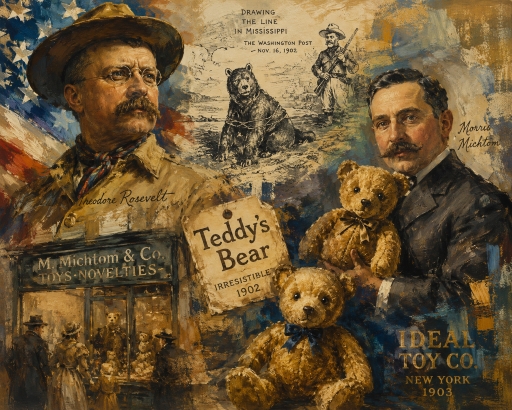
The Teddy Bear’s story began in 1902 with President Theodore Roosevelt.
That year, Roosevelt joined a hunting trip in Mississippi. During the expedition, members of his party cornered and tied a black bear. However, Roosevelt refused to shoot the animal because he considered the situation unfair and unsportsmanlike.
News of the event quickly spread across the country. Soon afterward, political cartoonist Clifford Berryman illustrated the moment in a cartoon published by The Washington Post. The cartoon depicted a small bear and highlighted Roosevelt’s compassion.
As a result, the image captured the public’s imagination.
Morris Michtom Creates the First Teddy Bear
One person found special inspiration in the famous cartoon. Morris Michtom, a Russian immigrant and shop owner in Brooklyn, saw an opportunity. Together with his wife, Rose Michtom, he created a small stuffed bear and displayed it in their store window. Next, Michtom requested permission to use the President’s nickname. Roosevelt agreed. Therefore, the couple named their toy “Teddy’s Bear.”
Customers immediately fell in love with the design. Demand increased so quickly that the Michtoms soon launched the Ideal Novelty and Toy Company. Eventually, the business grew into one of the largest toy companies in the world.
Germany Developed Teddy Bears Too
Interestingly, the Teddy Bear did not emerge only in America. Around the same time, German toy company Steiff developed realistic stuffed bears. Margarete Steiff founded the company despite significant physical challenges throughout her life. Her nephew, Richard Steiff, later designed bears with movable arms and legs.
In 1903, Steiff exhibited its bears at a toy fair in Germany. An American buyer reportedly ordered thousands of bears. Consequently, Steiff bears became an international success and helped fuel the growing Teddy Bear craze.
Early Teddy Bears Looked Much Different
Modern Teddy Bears appear soft, round, and cuddly. However, early Teddy Bears looked quite different. Manufacturers often used mohair fabric made from Angora goat hair. Many bears featured long snouts, humpbacks, and slender limbs.
Toy makers stuffed them with wood wool rather than soft polyester filling. As manufacturing techniques improved, Teddy Bears became softer and more child-friendly. Today’s bears typically feature plush fabrics, embroidered details, and machine-washable materials.
Why Teddy Bears Matter to Children
Parents often notice strong emotional attachments between children and stuffed animals. Experts believe comfort objects help children navigate new experiences and challenges. A favorite Teddy Bear can ease bedtime anxiety, support emotional regulation, and provide reassurance during stressful situations.
Additionally, Teddy Bears encourage imaginative play. Children create stories, conversations, and adventures with their favorite bears. These activities help develop creativity, empathy, and communication skills.
Fascinating Teddy Bears and Childhood Development
Research continues to highlight the value of comfort toys. Many child development specialists view stuffed animals as important transitional objects. These objects help children build independence while maintaining a sense of security.
Furthermore, Teddy Bears often become trusted companions during major life changes. Whether facing a first day of school or a family move, many children turn to their favorite bear for comfort.
Famous Teddy Bears in Popular Culture
Teddy Bears have inspired countless books, movies, and television shows. Perhaps the most famous bear is Winnie-the-Pooh. Author A.A. Milne based the beloved character on a real stuffed bear owned by his son, Christopher Robin.
Another famous example is Paddington Bear. Created by Michael Bond in 1958, Paddington became a global favorite thanks to his kindness, curiosity, and signature blue coat. These characters helped cement Teddy Bears as cultural icons across generations.
Teddy Bears Become Valuable Collectibles
Children are not the only Teddy Bear fans. Many adults collect Teddy Bears as a serious hobby. Collectors often seek antique bears from Steiff, Ideal, Gund, and other historic manufacturers.
Some rare bears command astonishing prices at auction. In fact, certain antique Steiff bears have sold for tens of thousands of dollars. Their rarity, condition, and historical significance drive collector interest.
Teddy Bear Museums Around the World
As Teddy Bears gained popularity, museums dedicated to them began appearing worldwide. These museums showcase antique bears, rare collections, historic photographs, and toy-making techniques. Visitors can learn how manufacturers designed, produced, and marketed Teddy Bears over the decades. For historians, these collections offer valuable insights into childhood culture and consumer trends. For families, they provide a fun and educational experience.
Teddy Bears Beyond the Toy Box
Over the years, Teddy Bears have served many purposes beyond playtime. Hospitals frequently give Teddy Bears to children facing medical procedures. Emergency responders often carry Teddy Bears to comfort young children during crises.
Many organizations also use Teddy Bears as mascots. Sports teams, charities, schools, and military groups often choose bears because they symbolize comfort, strength, and trust.
Fascinating Teddy Bear Facts
Here are several surprising facts parents and history lovers may enjoy:
- The Teddy Bear originated in 1902.
- President Theodore Roosevelt never actually created the toy.
- Morris and Rose Michtom introduced the first American Teddy Bear.
- Steiff helped popularize Teddy Bears internationally.
- Early Teddy Bears often contained wood wool stuffing.
- Mohair remained a premium Teddy Bear material for decades.
- Some antique Teddy Bears sell for more than luxury automobiles.
- Teddy Bear museums exist in multiple countries.
- Teddy Bears frequently appear in children’s hospitals worldwide.
- Collectors continue to hunt for rare vintage bears today.
Why Fascinating Teddy Bears Remain Popular Today
Children now have access to tablets, smartphones, and interactive toys. Nevertheless, Teddy Bears continue to thrive. Their simplicity, warmth, and emotional connection remain timeless.
Parents appreciate their comforting presence. Grandparents enjoy sharing stories about childhood bears. Collectors preserve their history for future generations. As a result, the Fascinating Teddy Bear continues to bridge generations in a way few toys can match.
A Legacy That Continues
More than a century after its creation, the Fascinating Teddy Bear remains a beloved symbol of childhood. Its story combines presidential history, entrepreneurial innovation, toy-making craftsmanship, and emotional connection. Few toys have influenced popular culture so deeply or lasted so long.
Whether displayed on a collector’s shelf or hugged every night by a child, the Teddy Bear continues to bring comfort, joy, and lasting memories to families around the world.
Discover more from Make-A-Pet
Subscribe to get the latest posts sent to your email.